

Unchained: Brendan Greeley's "Almighty Dollar"
The dollar's fate is mostly beyond the will or reach of the United States.
I’ve been writing about fintech for a decade and that has meant digesting a lot of really bad takes about money. I’ve spent these years not just writing about digital finance, but trying to understand what money is, where it comes from, who it serves, and why.
Money is about systems so it’s hard to understand in the snapshot format of journalism. Books do a much better job. One of the best is Brendan Greeley’s The Almighty Dollar, which came out earlier this year. The reason it is so good is that it delves into specific historical moments that are mostly forgotten but which provide evidence as to why our mythology about money, and the US dollar in particular, is so misinformed.
Greeley takes familiar arguments, turns them inside out, and discovers a perspective that answers a lot of the seeming contradictions in our money myths.
For a fintech writer, he is disappointingly curt, glib even, about stablecoins or other aspects of digital finance. He sees them as simply new wine in old bottles. I’ll probably spend more time in this review talking about stablecoins than Greeley does in his book. But this isn’t because I think Greeley is wrong. Nor does it mean we can just shrug and say, “Stablecoins, meh, old wine in new bottles.” But we can have a clearer idea of why this is so, and what that means for the finance industry.
Bad takes
The most interesting takeaway in Greeley’s argument is that we err by equating the dollar with the United States. Of the two, the dollar is older, bigger, and the one that is becoming more powerful rather than experiencing relative decline.
His in-depth examinations of the dollar in its earlier incarnations show it was transnational from the start. America later adapted to a currency that was already circulating through global trade. The US didn’t invent the dollar. It inherited it, standardized it, and scaled it. And now the dollar, truly almighty, is poised to slip its leash again.
Yes, the Federal Reserve and the U.S. government are powerful, but they have never been fully in charge of the dollar system.
One of the worst takes on money that I’ve endured this past decade is the bbrrrrrr money printer notion that bitcoiners, goldbugs, and even your everyday banker like to talk about. It’s a great way to blame the Fed (or whoever) for inflation, or currency debasement, or whatever economic trend is in the news. These views usually come with a hidden sales pitch to buy some kind of magic asset to save yourself from this Gomorrah of currency mismanagement. More politely, this is the view of advocates of hard money, limited by some artificial constraint: rocks in the ground, data blocks mined.
Modern monetary theory, or MMT, sits on the other extreme: the government should go bbrrrrr all it likes! The government really should be in the money-creating business! Usually associated with pinkos, it was Dick Cheney who declared “deficits don’t matter”. Anyway, MMT is more about mismanaging an economy rather than about money per se.
Another argument, one I’ve been more partial to, is that the dominant currency stems from politics: that it flourishes because of well regulated markets; that nomos, Greek for ‘law’, is what gives us nomisma, ‘currency’ or ‘coin’. Private experiments in currency have either been coopted by the state (such as paper notes in China), or eventually fizzled (all manner of local, community-level monies, leper colony notes, the Stella currency that for a time was used among speakers of Esperanto...etc.) These views also lead one into the realm of sociology and anthropology, which is both as fun and problematic as any metallist fantasy.
These arguments, valid or disingenuous, do serve the purpose of asking, what is money, what is currency, and how do they exist? Greeley provides us with the great service repositioning this as asking who is money for, and differentiating between ‘small money’ for us plebs leading our everyday lives, and moneta grossa for the bigwigs involved in large-scale and cross-border trade and finance.
Commercial banks
Whatever the theory, the clear answer about who creates money in today’s world is commercial banks. The Fed influences the price of money, by which it can affect growth and employment, but the business of making money lies in the fiat of double-ledger bank bookkeeping – an invention from 13th century Italy. Banks in the U.S. were printing money long before the Fed existed. Heck, Americans have been printing money before they licensed banks.
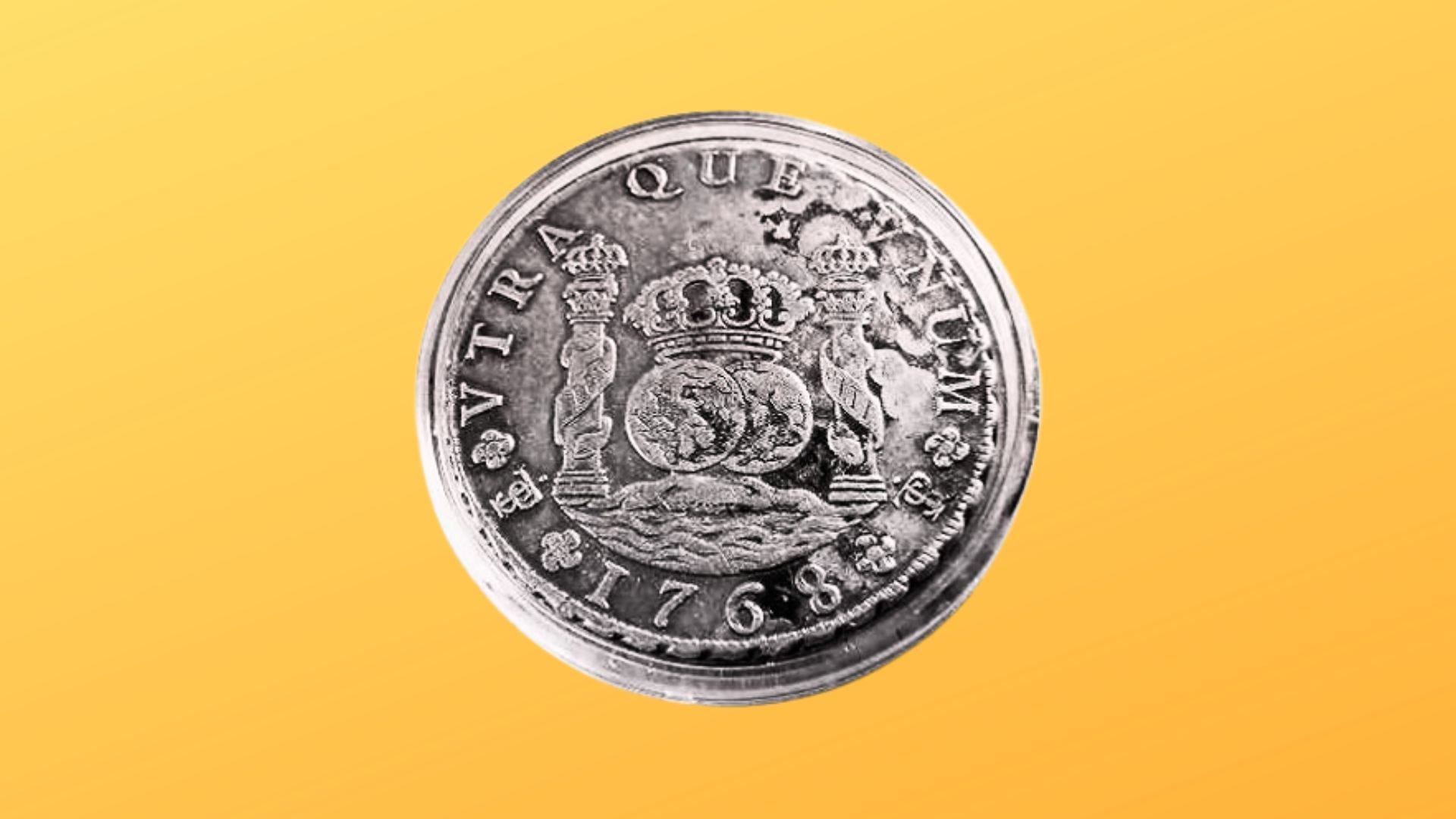
Greeley details how the origins of the dollar were minted as large silver coins in Bohemia by Saxon punters in the sixteenth century. These ‘thalers’ were plentiful and consistently designed for merchants conducting long-distance trade. The Hapsburgs mimicked the thaler when their Spanish conquistadors mined the New World, flooding Europe and Asia with standardized silver dollars. China played a passive but vital role as a sink, with bottomless demand for silver dollars – and at one point, specifically for Spanish silver dollars, not just silver ingot – that lasted for centuries.
(As an aside, from me, not Greeley: the reason China craved silver was because its emperors, jealous of their powers, never allowed merchants to evolve into Italian-style bankers. This ensured a rich man couldn’t become a political rival, but it also kneecapped China’s ability to develop a modern financial system. One of the weaknesses of Greeley’s otherwise fine book is that he doesn’t explore in detail why China became the world’s dollar sink. A missed opportunity!)
Offshore dollars
All of this is to explain that the Fed and the Treasury Department have never been fully in charge of the dollar system. The modern dollar is manufactured through banks, offshore markets, and global habits that extend well beyond Washington, D.C. The result is a currency that is deeply American in law and infrastructure, but not purely American in operation or demand.
This came as a surprise to American politicians. Bretton Woods placed the dollar at the center of global trade. Other currencies were pegged to the dollar but only the dollar was pegged to gold. No one understood it at the time, but the emergence of the eurodollar market in London in the 1950s ensured the end of the Bretton Woods arrangement.
Eurodollars enabled banks outside of the U.S. (including offshore branches of American banks) to create dollar liabilities of their own, denominated in dollars but outside the reach of U.S. regulators. They did this because it was profitable, but also because the system already had strong global demand for dollar assets. This was despite Bretton Woods, whose creators hadn’t anticipated eurodollars. Under Bretton Woods, countries operated with capital controls, and the International Monetary Fund was designed to smooth out balances of payments and ensure flows of currency and gold – the gold was mostly in the U.S. – remained stable.
But if eurodollars were a bug in the Bretton Woods architecture, they were a feature of the postwar financial economy. They were evidence that the dollar’s real power came from network effects, not legal borders.
Stablecoins
Does this apply to stablecoins today? For those referencing USD, the question isn’t whether the instrument is onshore or offshore, but whether it can become a trusted, transferable, widely accepted dollar claim across venues, counterparties, and jurisdictions. Greeley says stablecoins are a new chapter in a long history of private actors manufacturing dollar-like money under the auspices but not the direct power of the state.
Stablecoins inherit the eurodollar problem: they can scale faster than policymakers can define them. If a stablecoin is used as settlement money, reserve money, treasury collateral, or trading money, then it is no longer just a payment app feature; it is part of the dollar system itself. That is the kind of system Greeley says the United States has often managed only indirectly, through regulation, emergency support, and toleration of private monetary innovation.
The book also suggests a hard truth for stablecoin advocates: stable money is not just about peg maintenance in calm markets. (I’ve written at length about this.) It is about what happens when confidence cracks, redemptions accelerate, and users ask whether the liability is truly money or merely a promise that behaves like money until stress arrives. In that sense, the stablecoin industry is living inside the same historical tension that shaped bank notes, deposits, and eurodollars.
Deep foundations
In the U.S. case, that tension originates in the decision to deny states the ability to print money – but to allow private banks to do so. This is the foundation of American monetary history, and by extension our contemporary dollarized world. The dollar was no longer about silver coins. It was about banking.
If banks are still the deep architecture of dollars, then the winning stablecoin models are the ones that connect cleanly to bank balance sheets, bank reserves, and bank-style compliance. A stablecoin that tries to bypass the banking system entirely may find itself out in the cold.
By the same, ah, token, Greeley’s book is cautious about neat theories of dollar replacement. These ideas are often packaged as new the eclipse of the greenback by a new public currency or digital asset, probably linked to the rise of China. Greeley’s history says the currency dominance comes from habits, settlement depth, credible liabilities, and persistent use across many types of users. The dollar is sticky because it sits inside global banking, trade invoicing, reserves, and credit creation.
The fact that governments and conference speakers inveigh against it doesn’t really matter. It is true that the U.S. government has weaponized its chokehold on dollars, which is leading to strident efforts to avoid the long reach of Washington. Ditto for the Trumpian campaign to end Fed independence. At some point, institutional degradation and deficit living could lead to a financial crisis that endangers America’s ‘exorbitant privilege’ of the dollar.
But the current demand for USD stablecoins suggests – to me, at least – the answer will lie in unregulated dollars, not in a new currency. The fact that the Genius Act prohibits the Fed from any action related to a digital dollar not only ensures the privatization of tokenized dollars, but removes the central bank from even surveilling this market – so I find it hard to imagine the U.S. can weaponize stablecoins as it has done to flows that pass through American banks.
A future crisis may end cheap financing for the U.S. government, but not necessarily demand for dollars, or even Treasurys (at current prices). Replacement stories such as Saudi Arabia invoicing oil exports in yuan are going to remain limited to specific trade and currency corridors, and in any case are political statements more than epochal monetary events.
This doesn’t mean the dollar regime is infinite and immortal, but the Spanish experience with its silver dollar shows that the elite’s desire for promoting their international currency – at the expense of local industry and prosperity – can enable a currency to outlast the empire for a very long time.
A final note: Greeley is an entertaining writer. A former financial journalist turned professional historian, his book brings to life otherwise obscure, ordinary figures who turned out to have played fascinating roles in the dollar’s history. He also does a great job of explaining the technicalities of balance sheet accounting. This was a very satisfying read.
Greeley, Brendan, The Almighty Dollar: 500 Years of the World’s Most Powerful Money, Crown Currency, 2026.
You may also want to read:
Repo markets can break a stablecoin

In Part 1 of this series, we looked past “trillions settled on‑chain” and asked where stablecoins actually matter in payments. Part 2 walked through how lawmakers are forcing these instruments into familiar legal boxes, from the US Genius Act to MiCA and Asia’s first licensing regimes.