

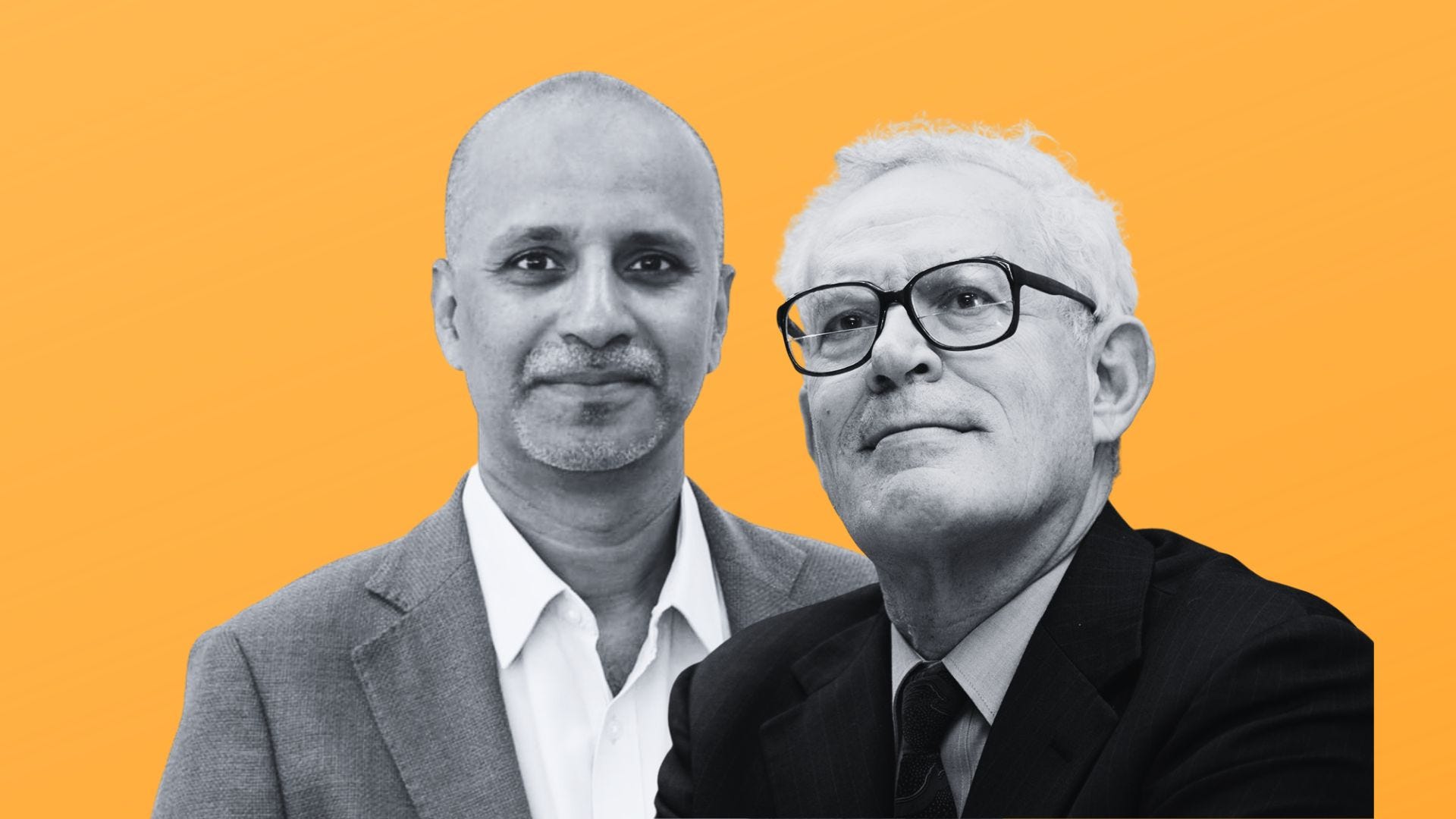
In 2020, Charles Goodhart and Manoj Pradhan published “The Great Demographic Reversal”, which argued that demography and the retreat of globalization would lead to higher sustained inflation and higher interest rates, as well as reduce inequality in both Western and Asian societies.
The crux of their argument was that aging would require much higher spending by governments, and a shift in economies, to support the needs of a vastly older population, with its related need for healthcare and assistance for people afflicted with dementia.
Globalization, midwife of the explosion in digital technology, and the “China shock” of a vast workforce that worked competently for far lower wages, was now on the retreat – not because of geopolitics but simply because of China (and East Asia) was on the cusp of a demographic crash in its working-age population.
The rising costs of elder care and the fraying of globalization’s benefits would come on top of better-known expectations of higher spending needs for mitigating climate change, and rising defense budgets. As a result, inflation would persist, and require a step rise in interest rates.
The authors are economists. Goodhart is a former policy wonk from the Bank of England, and Pradhan was formerly chief economist at Morgan Stanley. Together they run an independent research firm. And now they’re back with a new book, “The Unanchored Central Banker”, which builds on the arguments set out six years ago.
China, A.I., and central banking
Their new book lacks the surprise of its predecessor. In 2020, they were predicting inflation at a time when there was none; they were quickly proved right, perhaps more by the random impact of Covid. Today their thinking is more mainstream, but still a minority view – which is what has prompted this new volume, which examines the arguments of their critics.
What’s new: a greater emphasis on what this means for central banking; and AI.
Central banking is becoming “unanchored”, which is to say, we are leaving a long period of strong, independent central banks and into one in which treasury departments and fiscal policy call the shots. Central banks have mostly had just one job: price stability. Even the Fed, with a dual mandate that includes growth, has usually deferred to price stability (although Janet Yellen’s term in the Covid period was an exception). These salad days are coming to an end.
The rise of industrial policy in the US, and the current treasury secretary’s involvement in multiple currency bailouts (today’s is for Japan), are clear examples of the rise of fiscal power. When the U.S. bailed out Mexico in the 1990s, the so-called ‘committee to save the world’ included Treasury and the Fed; but today’s frantic schemes are just Scott Bessant. Nor do I think many people expect the new Federal Reserve governor, Kevin Warsh, to defend Fed independence in its traditional realms as fiercely as his predecessor.
Of course, this won’t be a straight line, and the Liz Truss premiership in the U.K. revealed the limits of what fiscal policy can achieve when the bond markets deem it unrealistic. Goodhart and Pradhan argue, however, that independent central banking was always a bit of a mirage. Central banks were independent because the circumstances of a low-inflation world, driven by globalization, made it easy. The actual contribution of those central banks, the authors say, has been overstated.
Two swing factors occupy much of the authors’ attention: China and A.I.
Swing factor 1: China
China’s economic transformation played the biggest role in the authors’ first book. China brought down the cost of production of goods (but not of services). This gave central banks plenty of breathing space to meet inflation targets. The China boom was built (partly) on demographics: the vast internal migrations from village to boomtowns expanded the workforce and kept wages low. But now the population has peaked, far more people are aging out of work, while laborers are now facing massive burdens of caregiving that the one-child policy has worsened.
This plus the housing bust goes a long way to explain high domestic savings and little consumption (although just as important are the complex but comprehensive policies to subsidize manufacturing and exports). The upshot: costs are going to rise in China, and in time China will switch from being an exporter of deflation to an exporter of inflation. Its own savings will have to fall as the government targets spending on old-age care, a necessity to ensure social stability. Not only will Chinese wages continue to rise, but its own overseas capital will begin to return home, to help pay for these new costs, thus gradually forcing the U.S. to keep its own interest rates high to compete for this capital.
Swing factor 2: A.I.
But it’s possible that the China factor could be mitigated by A.I. In our lifetime, our experience with digital technology has been one of deflation. Whether it’s assembling a car or a chip, or using software to reinvent many of our businesses, tech has brought down costs across many industries. Won’t A.I. do the same, particularly if it renders so many white-collar jobs superfluous? And, in the process, make it difficult for central banks to raise interest rates lest they trigger a recession?
The authors are skeptical about A.I. as a monster of mass unemployment. While it is true that A.I. is going to have a major impact on most industries, as well as on society in general, the authors expect this revolution will also create many new jobs. We just can’t imagine what they’ll be. As a result,
The A.I. debate has been raging for years, so what’s notable is Goodhart and Pradhan’s position is built upon demography. A.I. will lower the price of some services, but they don’t expect it to reverse the structural tightening of labor markets, or relieve the fiscal burdens of caring for older populations.
The authors think we will experience A.I. as a long series of productivity shocks in particular sectors. But could A.I. also shock their assumption that central banks will lose the power to set interest rates, caught between the Charybdis of high inflation and the Scylla of political demands to inflate away the debt? (The implication is that losing out to fiscal politics will trigger a Truss-like crisis in the U.S., and then, ka-boom.)
But the Fed and its peers can also use A.I. to compress the cost of data analysis and model building, and create close to real-time tools for monetary policy, such as understanding inflation trends or stress-testing different fiscal decisions. In other words, the central banks could get a lot smarter with their data, and use that knowledge to fight their corner against intrusive politicians.
The authors consider this but believe the situation is basically hopeless...no, that’s the wrong wording. The long-term trends are simply too great. The tide is going out. What central banks will be able to do with their insight is to determine who bears the losses (short-term or long-term bondholders); Wall Street will use technology to automate the arbitrage. This is a dance between price stability and paying down the debt, but it’s not ‘independence’ á la mid-1980s Paul Volcker. Central banks won’t be setting the policy, merely optimizing among the bad choices handed them by an aging electorate and an ossified welfare state.
What about China’s adoption of A.I.? Won’t that extend its deflationary influence, not just in goods but in services too? The authors see this as a moderating factor but not the trend itself. There are simply too many fiscal needs in the West, as well as in China, and everyone is deeply in debt. (The good news is the authors believe our current expectations for a ‘K-shaped’ employment path will not continue; they believe A.I. is going to lower the playing field for many less-skilled people.)
Money, credit, and narrow banking
My thought experiment after reading this book is to wonder about implications for money and credit, which is a topic the authors ignore. If central banks are losing independence and must now handle a more complex, and contradictory, agenda, what about the nature of the commercial banking industry they supervise and sometimes guide?
I look at the rise of stablecoins, as egged on by the U.S. Treasury, as also the rise of narrow banking. It’s possible that stablecoin businesses may evolve into lending and perpetuate our fractional-reserve world. But as central banks risk their credibility and their influence, it’s possible that narrow banks will become more prominent and powerful (although this depends on what we consider ‘safe’ assets they use to back their tokens). It is possible that narrow banks will overtake those involved in maturity transformation as the safest place to put your money. That suggests a brake on credit and therefore lower GDP growth. It also leaves the U.S. Treasury even more dependent on foreign buyers, but of USD stablecoins rather than Treasuries, to sustain the dollar. This could offset the authors’ expected pullback of Chinese investment in U.S. financial assets, which would give the Fed wiggle-room to keep rates somewhat lower. Less growth would also lead politicians to demand lower rates.
While this may help the Fed, it would dent its ability to transmit monetary policy, which is done via open market operations vis-a-vis commercial banks. Stablecoin issuers wouldn’t respond to such tools; they mint and burn tokens, and thus buy and sell Treasuries, based on demand (especially algorithmically driven strategies), not on Fed levers. The funding conditions of households and businesses will slip further out of Fed influence, and traditional banks will find they must compete to have their desires heard. The thinly capitalized infrastructure of tokenized dollars would become a new focus requiring Fed support, including standing behind stablecoin collateral in times of stress, coordinating with Treasury on issuance that matches token demand, or integrating on-chain data into their liquidity and collateral frameworks.
Money and credit become instruments of state survival rather than free-market phenomenons. The question of who bears the losses – the last purview of the unanchored central bank – must now mediate between types of banking intermediaries.
Those stablecoin investors won’t stick around if they don’t get the yield and liquidity they expect, and that market could move faster than the bond market. Whatever benefits accrue from possible lower inflation expectations and foreign demand for dollars would be countered by an institutional framework based on less growth. That sounds like a harder job for the central banker. Perhaps Goodhart and Pradhan can turn their attention to money and credit, should they plump for a third outing.